And So It Begins…

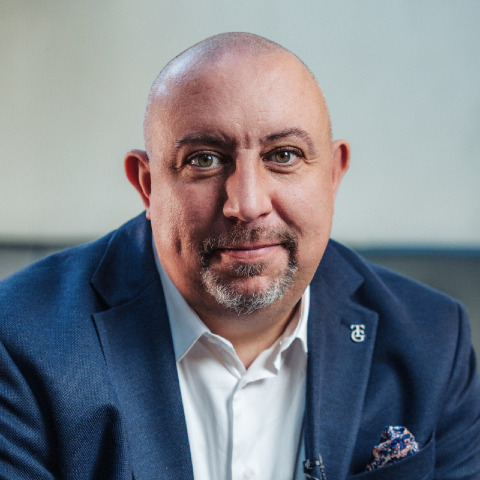
As the summer winds down and I enter my 19th season of working with students from around the world to achieve their academic goals, “begins” might seem like an odd word to use. Yet that is precisely the privilege of working in education: every September feels like a new beginning. New students, new challenges, new families placing their trust in us. And, with Lumo Privée, a new chapter for me as well.
As the summer winds down and I enter my 19th season of working with students from around the world to achieve their academic goals, “begins” might seem like an odd word to use. Yet that is precisely the privilege of working in education: every September feels like a new beginning. New students, new challenges, new families placing their trust in us. And, with Lumo Privée, a new chapter for me as well.
I find myself reflecting on what nearly two decades in international education have taught me, and on where we’re heading with Lumo Privée in today’s rapidly changing academic landscape. I’ve watched IB schools spring up in far-flung places as demand for international education has grown in an increasingly interconnected world. I’ve seen Brexit help Bocconi shed its “safety school” status on its way to becoming one of the most sought-after admission tickets on the Continent. And I’ve seen hundreds of students pass through my doors, both real and virtual, each with their own circumstances, needs, and dreams.
Working with students whose grades don’t reflect their ability, students who are already exceptional by any measure but need to be challenged, and others who simply need someone to believe in them, I’ve learned that there is no such thing as an “average student”.
That belief feels particularly important at a time when more and more students (and teachers!) are turning to AI for help with school assignments, tutoring, and, yes, even application essays. I remain convinced that the human element is fundamental to education, and that nothing can replace the expertise and judgement of a dedicated, experienced teacher.
A good tutor doesn’t just know the answer. They notice when a student is guessing rather than understanding, when someone is too embarrassed to admit they don’t know something, or when a student knows what to do but not why they’re doing it. They can explain the same concept three different ways when the first explanation doesn’t land. And, perhaps most importantly, they recognise when the problem isn’t a lack of knowledge, but a lack of confidence.
That doesn’t mean AI has no place in education. Far from it, in fact. It can explain a difficult concept after midnight with a test looming in the morning, generate practice questions in seconds, translate a passage, and put an extraordinary amount of information at a student’s fingertips. These are powerful tools. But information is not education, and technology cannot replace the human relationship at the heart of good teaching.
A student given the answers to tomorrow’s test may well pass it. A student who develops the right habits, learns how to think independently, and gains confidence in their own abilities is prepared not only for tomorrow’s test, but for all the ones that follow. There is no standard template for achieving that. What works for one student may be completely ineffective for another. This is why treating each student as a unique individual is central to what we are building with Lumo Privée.
My own path into international education has been anything but conventional. American by background and international by inclination, I’ve spent much of my life moving between countries and educational cultures. Hong Kong, Bali, Geneva, Warsaw, and New York, where I spent my Columbia years, have all played a part in shaping the way I see the world. Rather than settling into one place or one system, I’ve been drawn to the challenge of understanding how different cultures educate their young people, how students learn, and what makes some educational approaches more effective than others.
Eventually, I returned to Europe to launch a high school, bringing a distinctly American perspective to education. That experience was followed by another entrepreneurial chapter: building a tutoring agency dedicated to helping students navigate demanding academic programs, standardized tests, and university admissions. I’ve always preferred building something to being told how to do it. Education is a field in which that independence matters, because meaningful progress often begins with questioning the way things have always been done.
I’ve also never quite lost the test-prep enthusiast in me. As something of standardized test ‘nerd’, I still love working with a select group of students on standardized test preparation. There is something deeply satisfying about helping a student master a difficult question, discover a more elegant way to solve a problem, or finally understand the logic behind an answer. I’m equally happy to disappear down an educational rabbit hole: Did you know that quantitative student grading supposedly traces back to William Farish at Cambridge in 1792? Or that recruited athletes have historically enjoyed some of the highest admission rates at Harvard? These details might seem obscure, but they reveal something fascinating about the history, assumptions, and sometimes unexpected realities of education.
Now I’m bringing that experience to Milan: a city with ambitious families, a strong tradition of international education, and, most importantly, plenty of new voices to listen to. It is an exciting new base from which to continue doing what I love, even if I’m still keeping track of the days I spend here. After all, in an international life, the question of where you live is not always as straightforward as it sounds.
As we build partnerships with trusted local schools and families, our core team of nearly 200 talented tutors stands ready to help this year’s students find their own paths to academic success. Our tutors come from around the world, with backgrounds at leading international universities and experience working with students from all walks of life. As we continue to expand our roster, we look for people who have excelled in rigorous academic environments and, just as importantly, demonstrated the ability to share their knowledge and bring out the best in others.
I’m excited about the next chapter Lumo Privée brings. The academic landscape will continue to change: new technologies will emerge, universities will pivot, curricula will shift, and our understanding of what it means to be a successful student will evolve. But the need for thoughtful teachers, trusted mentors, curious minds, and meaningful human connection will remain.
And that is where Lumo Privée begins.
I’m greatly looking forward to being a part of it.